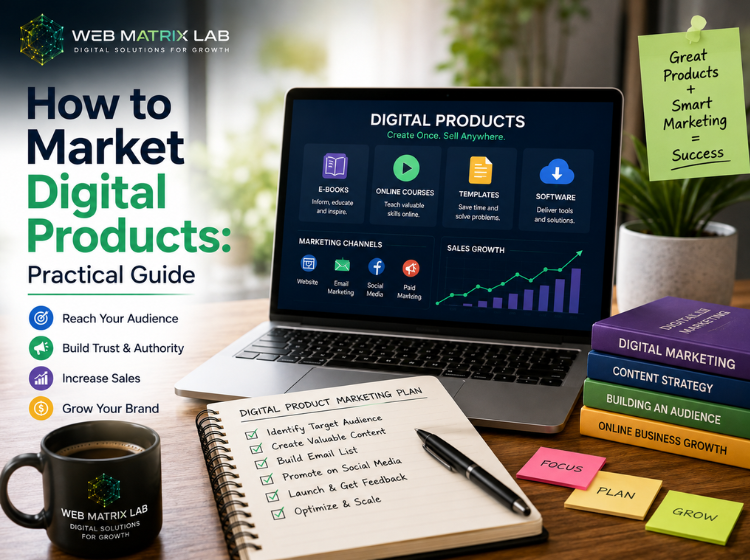
How to Market Digital Products: A Practical Guide
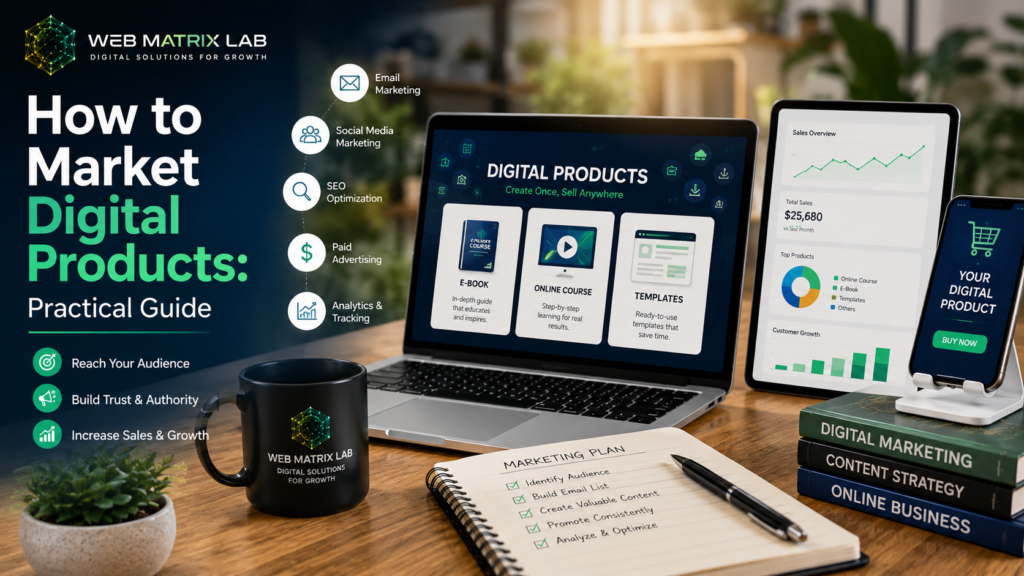
Creating a digital product is the easy part. You can build a course, write an ebook, or code a SaaS tool in a matter of weeks. Figuring out how to market digital products so people actually buy them? That’s where most solo entrepreneurs get stuck.
You’re not alone if you’ve launched something great and heard crickets. Marketing a digital product isn’t about luck or going viral. It’s about a handful of strategies, done deliberately, in the right order.
This guide covers exactly that. We’ll walk through what makes digital products different to sell, six core marketing strategies that actually move the needle, the mistakes that quietly kill launches, and a realistic plan to get started this week.
What Makes Marketing Digital Products Different
Digital products have real advantages. There’s no inventory, no shipping, and no manufacturing cost eating into your margins. Once you’ve made the thing, every sale after that is close to pure profit.
However, that advantage comes with a catch. Physical products let people touch, try on, or test something before buying. Digital products don’t offer that. A customer can’t flip through your ebook in a store or feel the fabric of your course content.
As a result, trust becomes your biggest currency. People are buying a promise: that your course will teach them, that your template will save them time, that your software will solve their problem. Because there’s nothing tangible to inspect, your marketing has to do the convincing that a physical product would normally do on its own.
This is also why “post and hope” doesn’t work. You need proof — testimonials, previews, free samples — layered into every strategy below. That’s the real starting point for anyone learning how to market digital products successfully.
Content Marketing and SEO for Organic Discovery
Content marketing means creating blog posts, videos, or guides that answer the questions your future customers are already searching for. For digital products, this works especially well because you’re often selling knowledge or a solution — and content lets you demonstrate both before asking for a sale.
For example, if you sell a course on freelance writing, a blog post titled “How to Find Your First Freelance Client” builds trust while quietly showcasing your expertise. The reader gets real value. You get a warm lead who already believes you know what you’re talking about.
SEO makes this compound over time. Unlike a paid ad that stops working the moment you stop paying, a well-ranked article can bring in buyers for years. This is precisely why understanding how to market digital products through organic content is worth the upfront effort.
Actionable tip: Pick one specific question your ideal customer types into Google — not a broad topic, an actual question — and write a 1,500-word answer this week. Answer it better than anyone else on page one.
Suggested image alt text: “how to market digital products through SEO content strategy”
Email Marketing and Building a List Before Launch
Email marketing means collecting email addresses and nurturing that list with valuable content before you ever pitch a sale. For digital product creators, this is arguably the single highest-leverage strategy available.
Because you own your email list — unlike a social media following, which a platform algorithm controls — it’s an asset that doesn’t disappear overnight. It also converts far better than cold traffic, since subscribers have already opted in to hear from you.
The mistake most beginners make is building their list after the product is finished. Instead, start collecting emails the moment you commit to building the product, even months before launch. Warm leads convert; cold ones rarely do.
Actionable tip: Create a simple lead magnet — a free checklist, template, or mini-guide directly related to your paid product — and offer it in exchange for an email address, starting today, not on launch day.
Social Media Marketing: Organic and Short-Form Video
Social media, particularly short-form video on platforms like TikTok, Instagram Reels, and YouTube Shorts, works because it lets potential buyers see you, hear your voice, and get a feel for your expertise before they spend a dime. This substitutes for the “touch and feel” digital products lack.
The key is specificity. Generic tips get scrolled past. However, a video that shows one specific, useful insight — something viewers can apply in 30 seconds — earns saves, shares, and follows.
Don’t try to be everywhere. Pick one platform where your audience actually spends time and commit to it.
Actionable tip: Film yourself teaching one small, complete lesson from inside your digital product — a two-minute snippet of real value — so viewers experience your teaching style firsthand before buying.
Paid Advertising with Google Ads and Meta Ads
Paid advertising means buying visibility instead of earning it organically. Google Ads captures people actively searching for a solution, while Meta Ads (Facebook and Instagram) let you target people based on interests and behavior, even if they aren’t searching yet.
For digital products, paid ads work best once you already have some organic proof — testimonials, reviews, or case studies — because cold traffic needs extra trust signals to convert. Skipping this step is why many first-time advertisers burn budget with nothing to show for it.
Start small. You don’t need a five-figure ad budget to test whether paid traffic works for your product.
Actionable tip: Run a $10-a-day retargeting ad aimed only at people who visited your sales page but didn’t buy — this audience is warmer and far cheaper to convert than cold traffic.

Affiliate or Partner Marketing
Affiliate marketing means recruiting other people — often creators or businesses with an audience similar to yours — to promote your product for a commission on each sale. This works exceptionally well for digital products because there’s no inventory to manage or shipping to coordinate; affiliates simply share a link.
Because commissions on digital products are usually a percentage of pure profit, you can afford to be generous — 30% to 50% is common and still leaves healthy margins.
The hardest part isn’t the payout structure. It’s finding the right partners and making it genuinely easy for them to promote you.
Actionable tip: Reach out to five people whose audience overlaps with yours, and offer them free lifetime access to your product in exchange for an honest review or mention, before asking them to become a paid affiliate.
Pre-Launch Waitlist and Launch Strategy
A pre-launch waitlist is a list of interested people who sign up to be notified when your product goes live, often in exchange for early access or a discount. This matters enormously for digital products because it turns launch day from a guessing game into a predictable event with a warm audience ready to buy.
Building anticipation also creates urgency. Because scarcity and timing drive action, a well-run launch week routinely outsells months of passive selling.
This is the strategy where everything above comes together — your content, email list, and social presence all feed the same waitlist.
Actionable tip: Open your waitlist at least four weeks before launch, and email that list twice a week with behind-the-scenes updates so they feel invested by the time doors open.
Common Mistakes to Avoid
Even smart, hardworking founders repeat the same marketing mistakes. Here are the ones that cost the most.
Launching before building an audience. If nobody knows you exist before launch day, no strategy can save you. Audience-building has to start early.
Ignoring the free-to-paid trust gap. People need proof before they pay for something intangible. Skipping testimonials, demos, or previews makes buyers hesitate.
Spreading effort across too many channels at once. Trying to run content, ads, email, and five social platforms simultaneously usually means doing all of them poorly. Pick two and go deep.
Treating launch as a single event instead of a sequence. A single “it’s live!” post rarely converts. Successful launches build momentum over one to two weeks.
Not tracking what actually works. Without basic analytics, you’re guessing which strategy deserves more of your time and budget. Even simple tracking changes decision-making dramatically.
Underpricing out of fear. Many creators underprice because they doubt their product’s value. However, low prices often signal low quality and attract the wrong customers — the ones who complain most and refund most often.
Avoiding these mistakes matters just as much as executing the strategies above. Understanding how to market digital products well means knowing what not to do, too.
How to Get Started This Week
You don’t need every strategy running at once. Start with three concrete steps.
Step 1: Create one lead magnet and a simple landing page to start collecting emails immediately, even if your product isn’t finished yet.
Step 2: Write one genuinely useful piece of content — a blog post or short video — that answers a real question your future customer is asking.
Step 3: Reach out to three people who could become affiliates, partners, or simply early supporters willing to share your work.
Do these three things this week, and you’ll have the real foundation of how to market digital products, instead of guessing.
Let’s Build Your Launch Strategy Together
Marketing a digital product on your own is possible, but it’s slow — and small mistakes add up fast. If you’d rather have experienced hands on the strategy, Web Matrix Lab’s digital marketing services can help you build the content, email, and paid strategy that actually gets your product in front of buyers.
Whether you need help with paid ad campaign management we’d love to talk through your launch. Reach out, and let’s turn your product into a business that sells itself.
Questions & Answers
How do I market a digital product with no budget?
Start with organic strategies first. Content marketing, email list-building, and reaching out directly to potential affiliates all cost time, not money. Add paid advertising only once you have some traction and proof — like testimonials — to make cold traffic convert better.
How long does it take to see results from marketing a digital product?
Most creators see meaningful traction within 60 to 90 days, assuming they’re consistently building an email list and publishing content. However, SEO-driven content can take three to six months to rank, so patience matters as much as effort.
What's the single best marketing channel for digital products?
There isn’t one universal answer, but email marketing is usually the highest-leverage channel because you own the list and it converts far better than cold traffic. That said, how to market digital products effectively usually means combining at least two channels, not relying on just one.
Do I need a large audience before I launch a digital product?
No, but you do need a warm one. A list of 200 genuinely engaged subscribers who trust you will often outsell 10,000 cold followers. Focus on relevance and trust over raw numbers.
Should I run paid ads before or after my first sales?
After, ideally. Paid ads work best when you already have testimonials, reviews, or case studies to build trust with cold traffic. Running ads too early, before you have any social proof, tends to waste budget.