5 Signs Your Business Needs Multi-Channel Inventory Sync
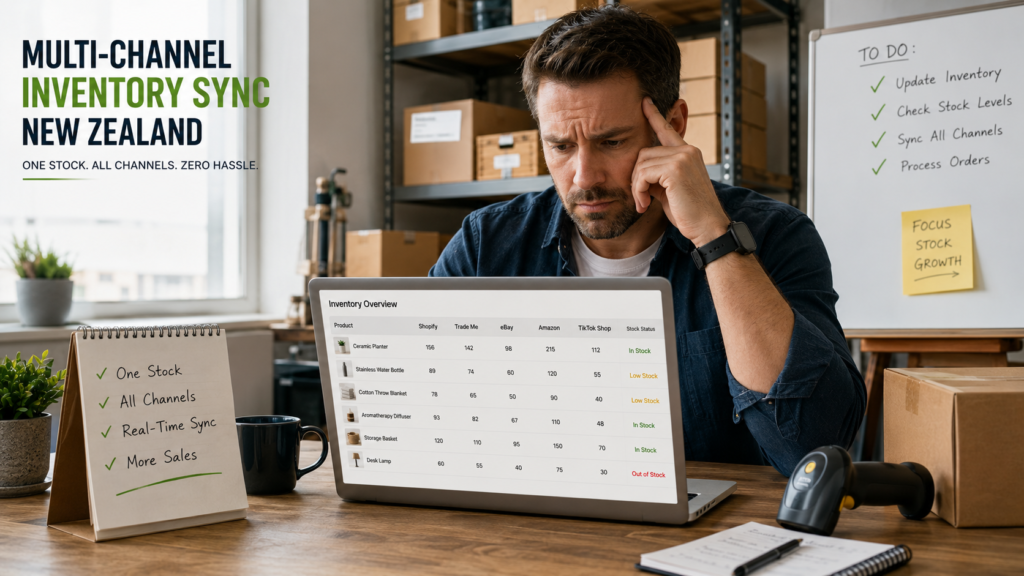
Selling on multiple platforms brings real growth. But it also brings real risk. Stock errors can quietly cost you sales every single week.
Here are five clear signs it’s time to invest in multi-channel inventory sync for your New Zealand business.
1. You’re Manually Updating Stock on Each Platform
If you log into every platform separately to update numbers, you’re not alone. However, this takes time. It also leaves room for mistakes.
Multi-channel inventory sync removes this step entirely. One update updates everywhere at once.
2. You’ve Had to Cancel Orders Due to Overselling
This is one of the clearest warning signs. If a product sells out on one platform, but still shows as available elsewhere, overselling happens. Customers then receive cancellations they didn’t expect.
This damages trust quickly. It also creates extra admin work to fix.

3. Your Prices Don’t Match Across Platforms
Over time, prices tend to drift apart. A sale price updated on one channel often gets missed on another. This confuses customers comparing your listings.
With proper sync, pricing updates flow to every platform automatically. Nothing gets left behind.
4. Your Team Spends Hours on Manual Admin Each Week
| Task | Without Sync | With Sync |
|---|---|---|
| Updating stock | Manual, per platform | Automatic, instant |
| Fixing pricing errors | Frequent, time-consuming | Rare, self-correcting |
| Managing new listings | Repeated across channels | Created once, pushed everywhere |
| Weekly admin time | Several hours | Minutes |
If this table feels familiar, it’s a strong sign your business has outgrown manual processes.
5. You’re Hesitant to Add a New Sales Channel
Growth often means adding new platforms. However, if the thought of managing “one more channel manually” feels overwhelming, that hesitation says a lot.
Multi-channel inventory sync removes this barrier. Adding a new platform becomes far simpler once your systems are properly connected.
What Should You Do Next?
Recognising these signs is the first step. The good news is that fixing them doesn’t require starting from scratch. A proper sync setup connects your existing platforms without disrupting current sales.
The right next step is a clear assessment of your current setup. From there, a tailored plan can address exactly what’s causing the most friction.
If several of these signs sound familiar, our team can help set up multi-channel inventory sync built around how your business actually sells.
Final Thoughts
Stock errors rarely announce themselves clearly. Instead, they show up as cancelled orders, wasted admin time, and quiet frustration. Recognising these five signs early makes it much easier to fix the problem before it grows.
Questions & Answers
How do I know if I need multi-channel inventory sync?
Common signs include manual stock updates, overselling, mismatched pricing, and spending hours on admin each week across platforms.
Can inventory sync fix overselling problems?
Yes. Multi-channel inventory sync updates stock levels instantly across every platform, significantly reducing the risk of overselling.
How much admin time does inventory sync actually save?
Businesses using multi-channel inventory sync often save several hours a week previously spent manually updating stock and pricing.
Is it hard to add a new platform once I have sync set up?
No. With multi-channel inventory sync already in place, adding a new sales channel becomes far simpler and faster.
What's the first step to fixing inventory sync issues?
The first step is a clear assessment of your current platforms, so a multi-channel inventory sync setup can be tailored properly.