E-commerce SEO New Zealand: A Simple Guide to Selling More Online

You’ve built a great online store. The products are good, the photos look sharp, checkout works smoothly. But sales are… quiet. Meanwhile, somewhere out there, a competitor with a worse product is outselling you, simply because more people can find them.
That’s usually not bad luck either — it’s e-commerce SEO New Zealand stores either have dialled in, or don’t have at all.
The truth is, running a successful online store isn’t just about having a nice-looking website. It’s about making sure Google can find your products, understand them, and confidently show them to the right shoppers at the right time. In this guide, we’ll walk through exactly what that looks like, in plain English.
What Makes E-commerce SEO Different?
Regular SEO focuses on getting a website found. E-commerce SEO does that too, but with a few extra layers, because online stores have their own unique challenges:
- Hundreds (or thousands) of product pages, many looking similar to each other
- Category pages that need to rank for broader, high-competition searches
- Constantly changing stock, which can create broken links and dead pages
- Filters and variants (size, colour, style) that can confuse search engines if not handled properly
Get it right, and each product and category page becomes its own doorway for new customers to walk through. Get it wrong, and even your best-selling products can stay practically invisible on Google.
Why It Matters for New Zealand Online Stores
New Zealand’s online shopping market keeps growing, and more Kiwis are comfortable buying everything from clothing to homeware without ever stepping into a physical shop. But that also means more stores are competing for the same searches.
Here’s why e-commerce SEO deserves real attention right now:
- Most online shopping research starts with a Google search, not a direct visit to your site
- Shoppers compare multiple stores before buying, so visibility at the research stage matters
- Paid ads can drive quick traffic, but stop the moment you stop paying — SEO keeps working
- Local and niche New Zealand stores can often outrank bigger, generic international sites for specific searches
The Core Building Blocks of E-commerce SEO
1. Product Page Optimisation
Each product page needs to work hard on its own. That means a clear, descriptive title, genuine product details (not just the manufacturer’s generic description), and content that answers the questions a buyer would actually have before purchasing.
2. Category and Site Structure
Your category pages should be logically organised and easy to navigate, both for shoppers and for search engines. A confusing structure, with products buried several clicks deep, makes it harder for Google to understand what you sell — and harder for customers to find it.
3. Technical Health
Online stores are especially prone to technical issues: slow-loading product images, duplicate content from filters, and broken links from discontinued products. Left unchecked, these quietly drag your rankings down over time.
4. Content That Builds Trust
Buying guides, FAQs, and honest product comparisons help both shoppers and search engines. They show Google your site is a genuine resource, not just a list of products, and they help nervous buyers feel confident enough to click “add to cart.”
E-commerce SEO Priorities at a Glance
| Focus Area | Common Problem | Simple Fix |
|---|---|---|
| Product Titles | Vague or duplicated across similar items | Write clear, specific, keyword-relevant titles |
| Product Descriptions | Copied straight from the manufacturer | Rewrite in your own words, with real detail |
| Site Speed | Large, uncompressed product images | Compress images and use a fast host |
| Category Structure | Products buried too many clicks deep | Keep navigation simple and logical |
| Out-of-Stock Pages | Left live with broken links or errors | Redirect or clearly mark as discontinued |
| Reviews | Missing or not visible on product pages | Display genuine customer reviews prominently |
| Mobile Experience | Clunky checkout on smaller screens | Test and simplify the mobile buying journey |
Mistakes That Quietly Cost Online Stores Sales
We see the same handful of issues again and again with New Zealand e-commerce sites:
- Using manufacturer descriptions word-for-word. This creates duplicate content across the web, and Google struggles to know which page to rank.
- Leaving discontinued products live. Dead-end pages frustrate shoppers and waste your site’s crawl budget.
- Ignoring page speed on mobile. Slow product pages are one of the fastest ways to lose an impatient shopper.
- Skipping internal linking. Related products and “customers also bought” sections help both sales and SEO.
- Forgetting local relevance. Not mentioning New Zealand-specific details like delivery times, local currency, or local trust signals.
How Long Does E-commerce SEO Take to Pay Off?
Like most SEO work, it depends on your product range, competition, and how much work your site currently needs. That said, many online stores start seeing improvements in visibility and traffic within 60 to 90 days, with stronger sales growth building over 6 to 12 months as more pages climb the rankings.
Be wary of anyone promising instant results for an entire product catalogue — genuine, lasting e-commerce SEO takes consistent, ongoing work, not a single quick fix.
Choosing the Right E-commerce SEO Partner
If you’re looking for help rather than going it alone, look for a team that:
- Understands the specific challenges of online stores, not just general websites
- Reviews your product and category structure before recommending changes
- Explains their strategy clearly, without hiding behind technical jargon
- Has real experience with New Zealand shoppers and the local online market
- Focuses on genuine, sustainable growth rather than risky shortcuts
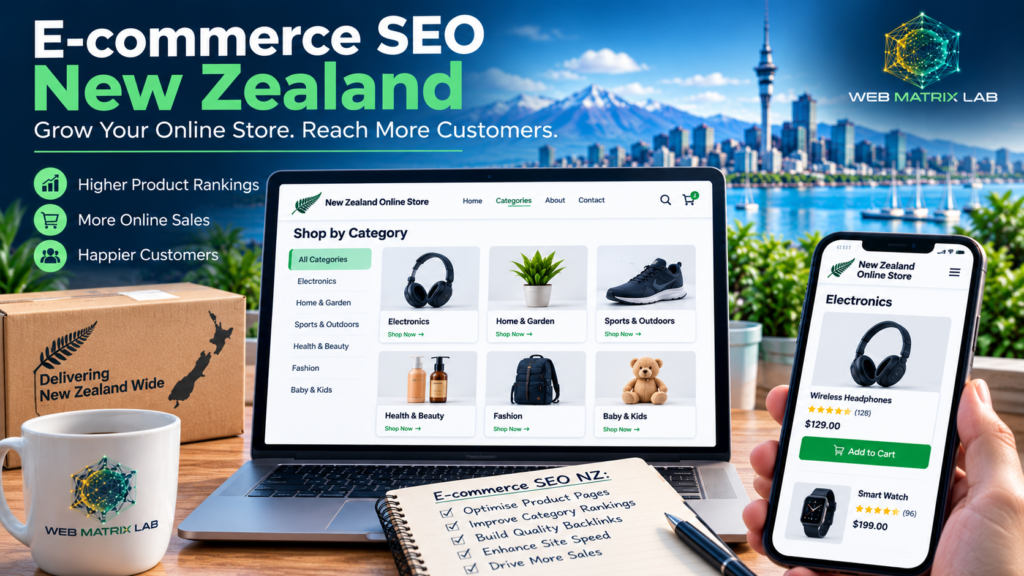
At Web Matrix Lab, our search engine optimisation New Zealand service includes dedicated e-commerce SEO support, covering everything from product page optimisation to category structure and conversion-focused improvements — built specifically for online stores selling to New Zealand customers.
Bringing It All Together
E-commerce SEO isn’t about tricking search engines into ranking your products. It’s about making your store genuinely easier for Google to understand and easier for real shoppers to trust and buy from. For New Zealand online stores, that means combining solid technical foundations with product pages that actually answer your customers’ questions.
If you’re ready to turn more browsers into buyers, get in touch with Web Matrix Lab for a free consultation built around your store and your market.
Questions & Answers
What does e-commerce SEO New Zealand actually involve?
E-commerce SEO New Zealand involves optimising your online store’s product pages, category structure, and technical performance so it ranks higher for the searches your customers are actually making, turning more visitors into paying customers.
How is e-commerce SEO New Zealand different from regular SEO?
E-commerce SEO New Zealand deals with challenges regular SEO doesn’t, like large numbers of product pages, changing stock levels, filters and variants, and the need to rank both broad category pages and specific product pages.
How much does e-commerce SEO New Zealand cost?
It depends on the size of your product catalogue and your competition. Most agencies, including Web Matrix Lab, start with a free audit and then provide a custom quote based on your store’s specific needs.
How long until e-commerce SEO New Zealand campaigns show results?
Many online stores see improvements in visibility within 60 to 90 days, with stronger sales growth building over 6 to 12 months as more product and category pages climb the rankings.
Can small online stores benefit from e-commerce SEO New Zealand services?
Yes, often significantly. Smaller New Zealand stores can use e-commerce SEO New Zealand strategies to target specific niches and local searches where larger, generic retailers have far less focused competition.